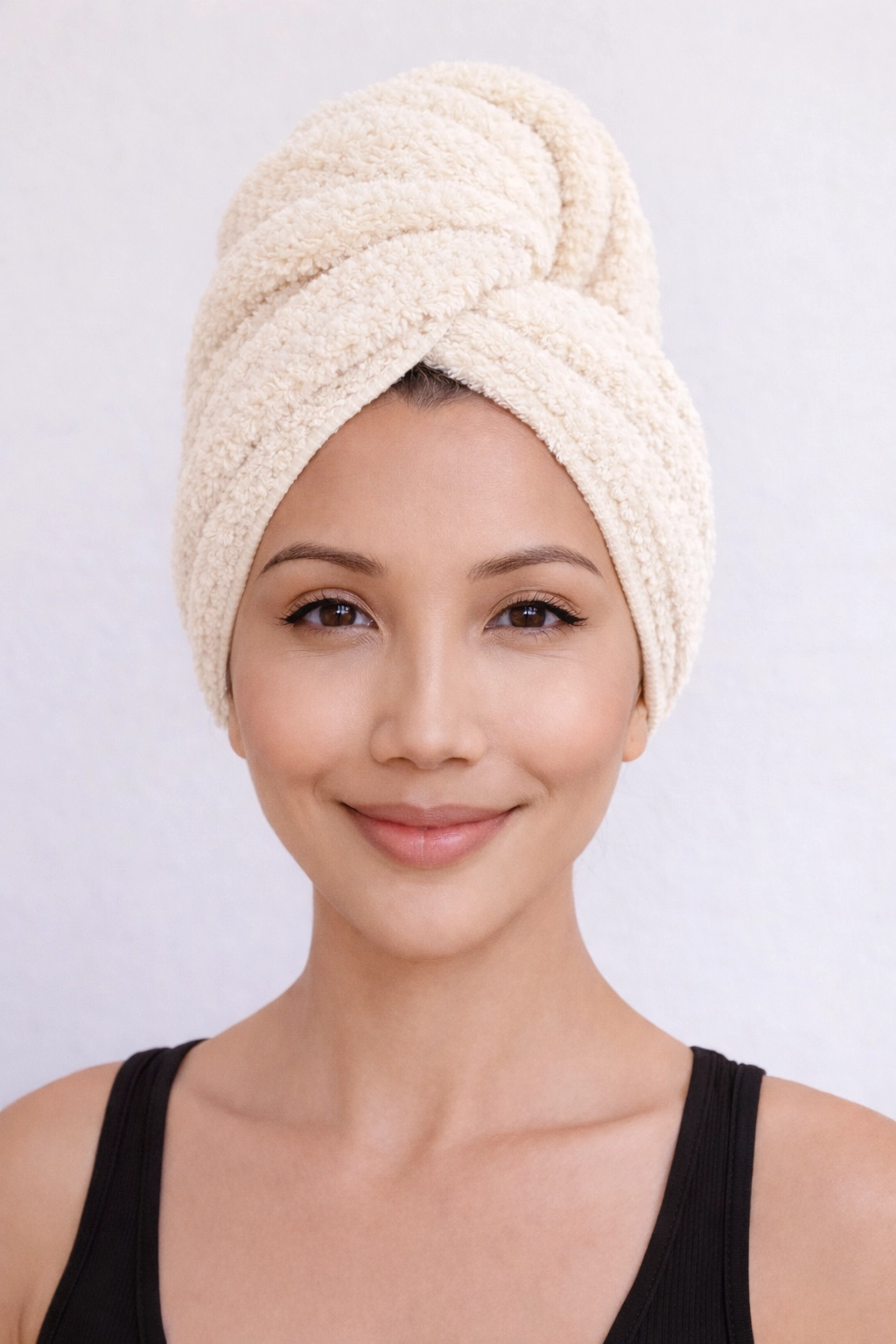
Hair changes often begin quietly. Many women first notice their hair feels drier, less shiny, or harder to manage—even before any visible thinning. The scalp may feel tight or slightly itchy, and hair may take longer to grow or style…
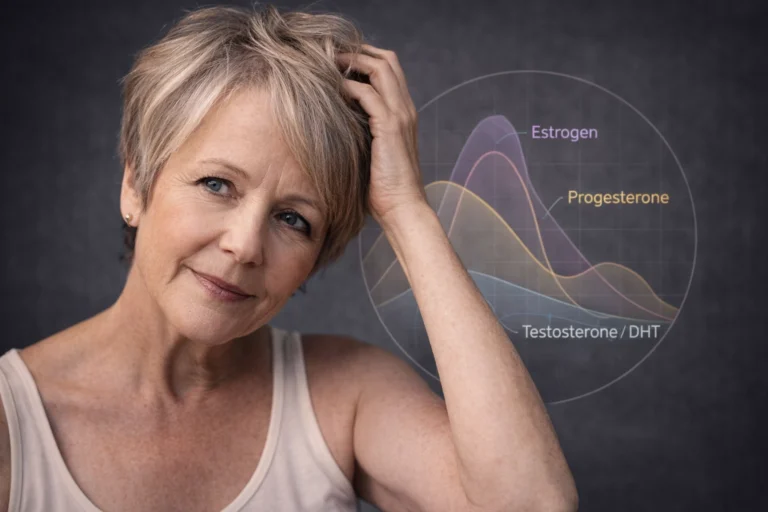
Estrogen, menopause, gradual thinning Hormones play a major role in hair health. As estrogen levels change with age—especially during perimenopause and menopause—the scalp produces less natural oil, and hair follicles may gradually become smaller. This can lead to thinner strands,…
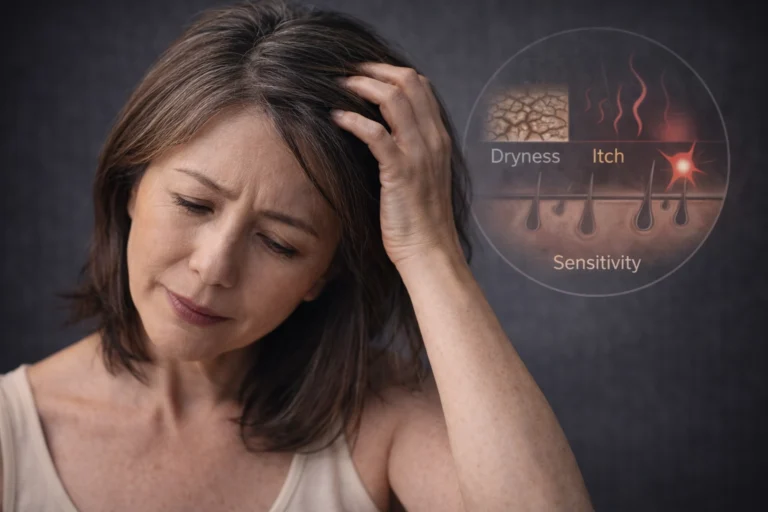
As hair changes, the scalp often changes first. Reduced oil production, hormonal shifts, and environmental stress can lead to dryness, itching, or increased sensitivity—even without dandruff or flakes. An uncomfortable scalp can affect hair growth and overall hair quality. Many…
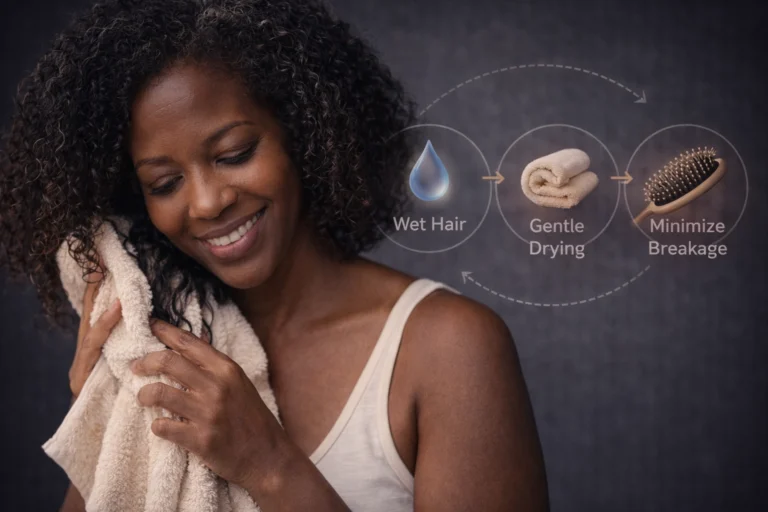
Gentle care, habits, prevention Hair that is changing needs different care than it did before. Wet hair becomes more fragile with age, and friction, pulling, or heavy handling can increase breakage and shedding. Small daily habits—how hair is dried, wrapped,…
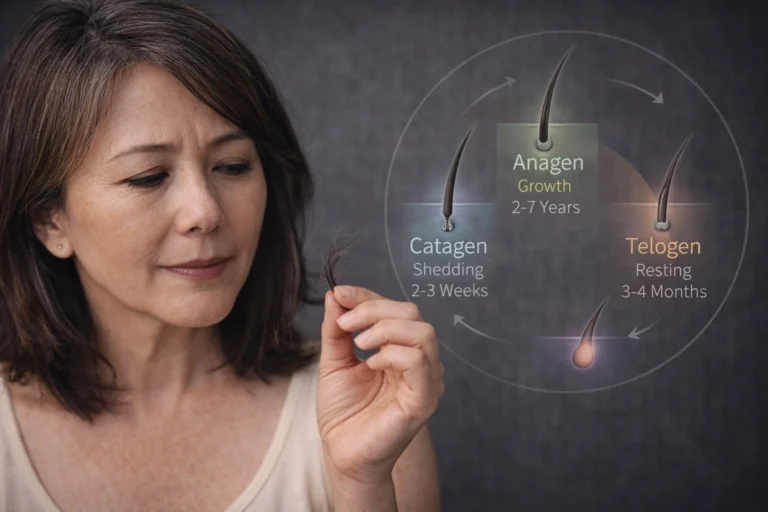
Hair growth follows a natural cycle that repeats throughout life, but this cycle changes with age, hormones, stress, and overall health. Understanding how hair grows—and why it sheds—helps explain why thinning, slower regrowth, or increased shedding can feel sudden or…
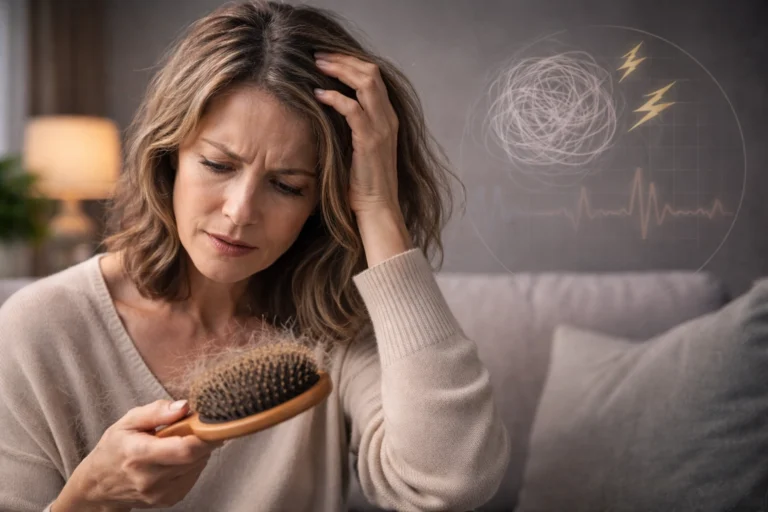
1. When Hair Starts to Feel Different Early hair changes rarely begin with visible hair loss. Instead, many women notice their hair simply doesn’t feel the same. It may feel drier, rougher, or less smooth than before. Hair that once…
